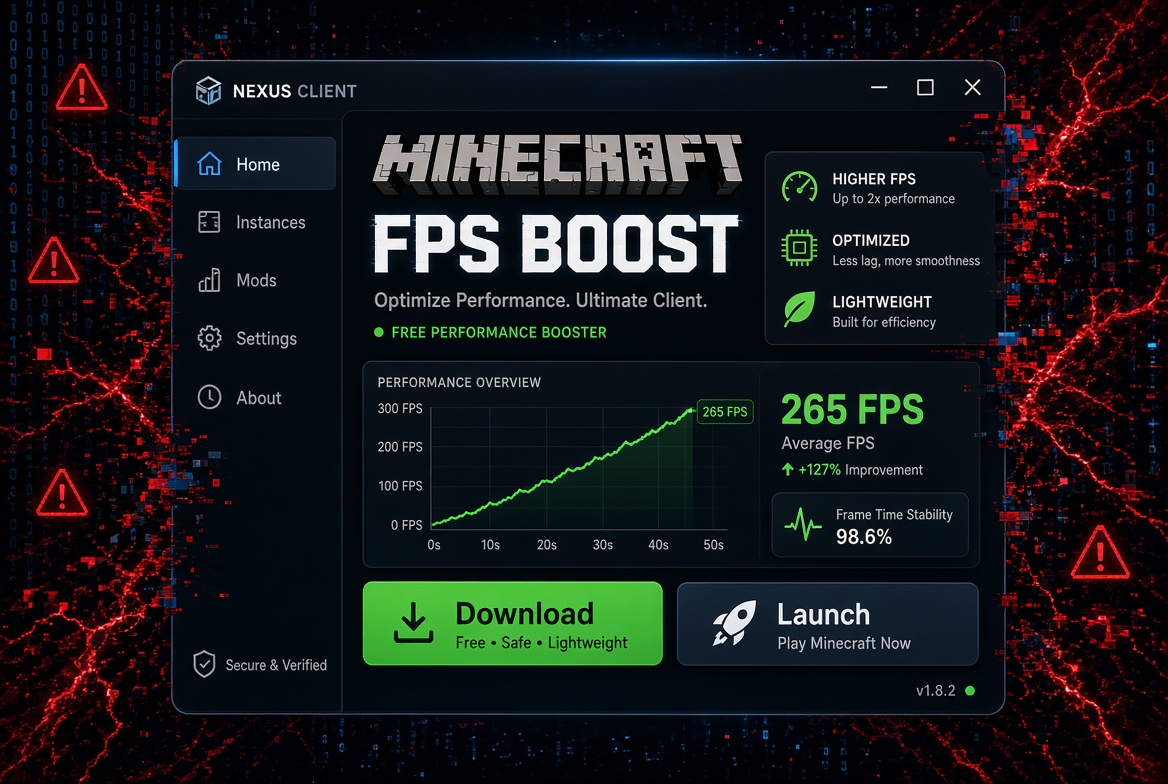
Weedhack is a high-risk malware campaign distributed through fake or modified Minecraft clients. Marketed as a performance booster or cheat tool, it actually functions as a Malware-as-a-Service platform. Once installed, it silently compromises the victim’s computer to steal identity data, banking credentials, and local files.
The Reality for Gamers in Nigeria
Although gaming threats are often viewed as a Western problem, players in Nigeria face elevated risk due to local cybersecurity conditions:
| Threat Factor | Impact & Figures |
|---|---|
| Large Exposed Audience | The Nigeria Data Protection Commission (NDPC) notes more than 60 million active digital users nationwide—creating a substantial pool of potential targets for credential theft. |
| High Regional Attack Volume | Nigeria ranks second in Africa for cyberattacks, with over 1.6 million web threat attempts recorded in recent six-month periods. |
| Dependence on Third-Party Software | High costs and currency pressures push many users toward informal downloads, modified clients, or “cracked” launchers—the exact distribution channels Weedhack exploits. |
| Direct Financial Risk | Compromised systems expose browser sessions linked to local online banking, mobile-money apps, and cryptocurrency assets stored on personal devices. |
Globally, the Weedhack campaign has infected more than 116,000 systems. It spreads through over 240 distribution links and generates 2,000–3,000 new infections daily.
How the Trap Works
Minecraft’s large community continually seeks custom clients that improve graphics, adjust game mechanics, or raise frame rates. Cybercriminals exploit this demand with a straightforward attack chain:
- The Bait: Players download a free client or mod pack promoted in YouTube videos, Discord servers, or untrusted file-sharing sites.
- The Hook: The launcher starts the game normally while quietly installing hidden code into the operating system.
- The Trap: The malware establishes a silent backdoor that connects the device to a remote command-and-control dashboard.
What Weedhack Does to a Computer
Once active, Weedhack gives attackers extensive control over the infected machine:
- Account Theft: Harvests saved passwords, session tokens (Discord, Steam, Telegram), and cookies from 36 web browsers and four major Minecraft launchers.
- Financial Drain: Scans 56 browser extensions and 12 desktop wallet applications for cryptocurrency data and drains available assets.
- Live Surveillance: Higher-tier versions enable real-time screen viewing, keystroke logging, and silent webcam activation.
- Remote File Hijacking: Allows operators to browse, download, or delete personal files and photos from local drives.
Essential Defense Rules
- Download only from official sources such as CurseForge, Modrinth, or the official Minecraft website.
- Never disable antivirus protection, Windows Defender, firewalls, or real-time security—even if a game file instructs you to do so.
- Avoid links in YouTube video descriptions, Discord direct messages, and unknown file-sharing sites; these remain the primary distribution channels.
- Enable multi-factor authentication (MFA/2FA) on primary email, banking, and Microsoft accounts to limit the damage if session tokens are stolen.
If you manage gaming PCs, shared family devices, or small business workstations, treat unofficial game clients as untrusted software until verified. When in doubt, stick to official launchers and keep security tools enabled.